Why the cooling season is hard on Dallas ductwork
In Dallas the AC runs from about March to November, and on the worst days it hardly stops. All that runtime means more air through the ducts and more dust settling in them. But the bigger issue on the AC side is water.
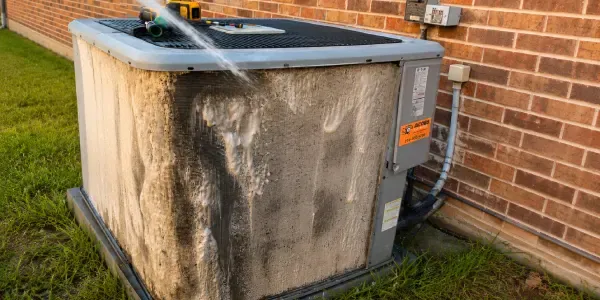
Your evaporator coil pulls moisture out of the air, which is half of what keeps a Dallas house comfortable. That water drips into the drain pan and runs out the condensate line. When everything works, you never think about it. When the coil is dusty, the pan is slow, or the ducts sweat in a hot attic, moisture ends up where it shouldn't. That's where most cooling-season duct complaints start.
Condensation in the attic
Picture a supply duct carrying air around 55°F through an attic that passes 130°F on a summer afternoon. The flex duct has an insulation layer and an outer vapor jacket for exactly that reason, usually R-6 or R-8 in Dallas homes. When the jacket tears, gets chewed, or slips off at a connection, hot humid attic air touches the cold inner liner and water forms.
That water soaks the insulation, drips on the drywall, and shows up as a brown ring on the ceiling under the run. Sometimes it's the first sign anyone notices. Cleaning doesn't fix a torn jacket. We'll photograph it and point it out, since it needs to be repaired or the run replaced.
That musty AC smell
The smell usually shows up the first few minutes after the AC kicks on. Here's where it tends to come from:
| What you notice | Where it usually starts | What actually helps |
|---|---|---|
| Musty smell for a few minutes at startup | Coil and drain pan in the air handler | Coil and pan cleaning, clear drain line |
| Smell only from one or two vents | Wet insulation or moisture in that run | Find the leak, replace the wet section, then clean |
| Sour or "dirty sock" smell all season | Growth on the coil | Coil cleaning, then watch it |
| Smell after a roof leak or storm | Water got into the ductwork or insulation | Inspection first, then repair and cleaning |
| Dust smell the first day of the season | Dust burning off or loosening after months idle | Usually fades. Clean if it doesn't |
Notice that most of those start at the equipment, not in the ducts. That's why we look at the coil and drain pan on every AC smell call. If the source is the equipment, cleaning the ducts alone won't get rid of the smell. That work is covered on our HVAC cleaning page.
AC vent cleaning
AC vents in Dallas homes take a beating in summer. Cold air hitting a warm ceiling means condensation at the register, especially in rooms with poor insulation above or where the boot isn't sealed to the drywall. You'll see it as water spots, rusty louvers, or dark speckling on the register face.
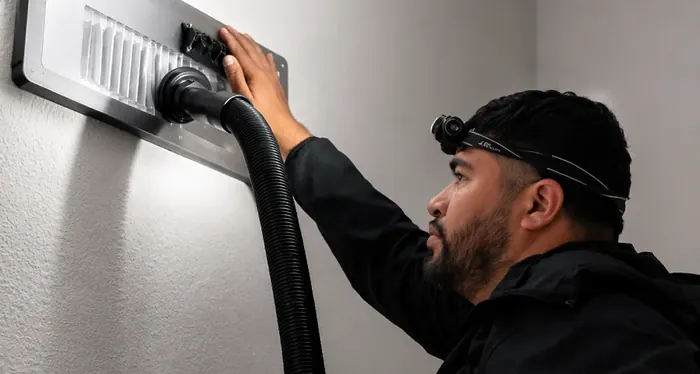
We take every supply register and return grille off, wash it, check the boot seal, and put it back. That's all part of the $99 full cleaning. If a register has dark spots that keep coming back after cleaning, the cause is moisture behind it, and painting over it only hides the problem. For more on registers, grilles and dust streaks, see vent and register cleaning.
What we look for on an AC duct cleaning
- Drain pan and condensate line. Standing water, slime, a slow drain.
- Coil face. Dust matting on the side you can see.
- Supply plenum. Moisture or growth right where the cold air leaves the coil.
- Supply runs in the attic. Torn jackets, sweating, wet insulation, sags where water collects.
- Registers. Rust, water spots, dark speckling.
- Return side. Dust and pet hair, which then coats the wet coil.
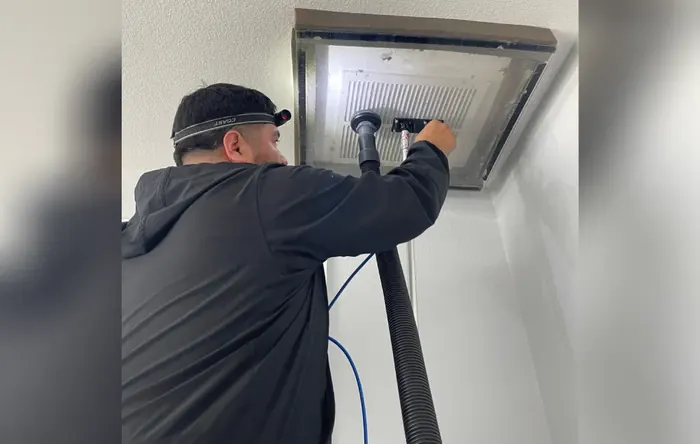
Then we clean the duct system under negative pressure, run agitation tools through every supply and return run, and wash and reset every vent.
About mold and the AC side
If you see dark growth on a register or near the coil, don't panic and don't let anyone sell you a fogging package on the spot. The EPA's advice on mold cleanup is direct: fix leaks and water problems as soon as possible and dry things out, or the growth comes back. The same page says not to run an HVAC system you know or suspect is contaminated with mold, since it can spread through the house. In a Dallas July that's a hard ask, which is one more reason to get it looked at quickly instead of waiting. Cleaning, sanitizing and treatment can be part of the answer, but only after the moisture source is dealt with. Mold treatment is quoted upfront in writing, never added mid-job. Our page on mold in air ducts and AC vents goes into the details.
Pollen, dust and a system that never rests
Dallas gets cedar pollen in winter and oak pollen in spring, right before the AC season ramps up. Add dust from road and housing construction, and a return grille in a busy hallway can collect a lot by May. That material lands on the wet coil and in the supply runs once the AC is running full time. A cleaning timed between pollen season and the first 95°F week clears it out before the long run.
When to schedule
The best window is late winter or early spring, after cedar season and before the AC runs all day. You get a clean system for the hot months and catch drain pan or coil problems before they turn into a ceiling stain in July. The middle of summer works too. The crew starts attic work early in the day when it's hottest.
If the smell is stubborn even after the ducts and equipment are clean, duct sanitizing and deodorizing is an option, quoted separately. For the full rundown on our duct cleaning process, start with Dallas air duct cleaning.