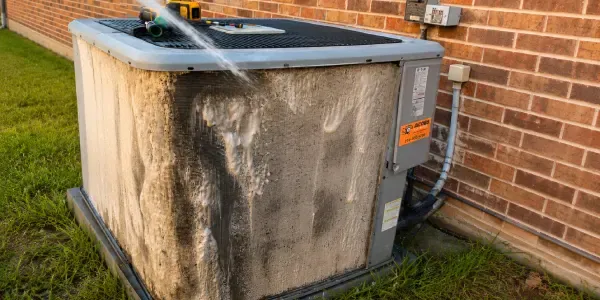
Why Dallas AC systems grow mold
Mold needs water. Dallas HVAC systems get plenty of it.
The AC runs roughly March to November, and the evaporator coil is wet that whole time. If the drain pan or condensate line clogs with algae, water sits under the coil for weeks. Up in the attic, where summer temperatures pass 130°F, cold supply ducts carry 55 degree air past hot, humid air. If a section of R-6 or R-8 flex duct has a torn jacket or crushed insulation, it sweats. So do registers in bathrooms and closets.
Then there's the weather. Spring storms drive rain under shingles, and the drip often lands right on the ductwork or the air handler platform. A slow roof leak over a supply trunk can go unnoticed for a whole season.
Dust by itself doesn't grow mold. Dust plus water does.
Is that actually mold?
A lot of what people call "mold in the vents" turns out to be something else. Here's what we usually find.
| What you see or smell | What it often is | Next step |
|---|---|---|
| Black specks on the face of a ceiling register | Dust and dirt, or mildew from the register sweating | Clean the register, check for condensation, look behind it |
| Gray or black ring on the ceiling around a vent | Dust staining from air leaking around the boot | Seal the boot to the drywall, clean the register |
| Musty smell when the AC kicks on | Wet drain pan, dirty coil, or damp duct insulation | Inspect the coil, pan and drain line |
| Fuzzy growth inside a sheet-metal plenum | Likely microbial growth | Inspection, and lab testing by a licensed assessor if you want it identified |
| Water stains on the ceiling under the air handler | Overflowing drain pan or a roof leak | Fix the water source before anything else |
| Wet, stained flex duct in the attic | Condensation or roof leak soaking the insulation | Replace that section; it can't be cleaned |
The EPA is blunt about this: only an expert can say for certain whether something is mold, and it may take lab analysis. We won't call anything "toxic mold" from a photo, and you should be suspicious of anyone who does. Scare talk about mold is one of the oldest tricks in the business. Lara's wrote about it in how to spot a duct cleaning scam in Dallas.
What we do, and where a licensed mold pro comes in
| Situation | What we do | Who else you may need |
|---|---|---|
| Light spotting on registers and grilles | Clean or recommend replacing the grille, check why it's sweating | Usually no one |
| Dust and debris with small, limited spots on sheet-metal ducts | Negative-pressure cleaning with agitation; an EPA-registered product only after cleaning and only where it's allowed on that job | Usually no one, if it stays under 25 contiguous square feet |
| Growth on the coil or in the drain pan | Coil and pan cleaning as part of HVAC cleaning | An HVAC contractor if the drain or pan needs repair |
| Moldy flex duct or duct board | We show you; it gets replaced, not cleaned | An HVAC contractor for replacement |
| 25 contiguous square feet or more, or growth spread through the system | We tell you on the spot and step back | A licensed mold assessor, then a separate licensed remediation contractor |
Note: Texas mold rules are run by TDLR. Projects under 25 contiguous square feet are exempt from mold licensing. At 25 square feet or more, the work needs a licensed mold assessor and a licensed remediator, and they can't be the same company on the same project. Under 16 TAC §78.130, mold remediation in HVAC systems follows the same rules, and applying anti-fungal products inside ducts falls under separate TDLR air conditioning licensing. We'll tell you upfront which of these applies to your house. If your job needs a license we don't hold, we say so before we quote, not after.
How our mold inspection works
- We look at the air handler first: coil, drain pan, drain line, and the platform under it.
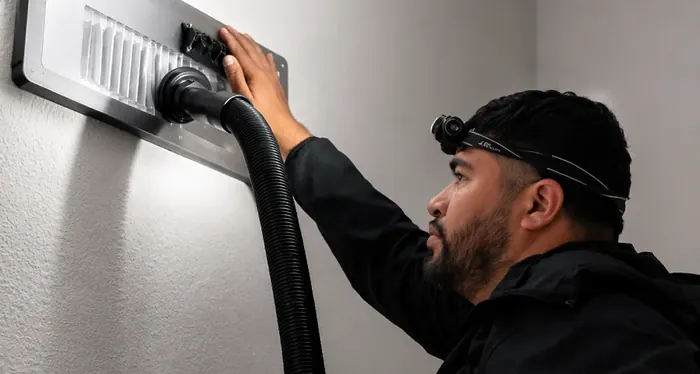
- We open registers and run a video camera into the supply and return ducts.
- We check the attic side for sweating ducts, torn jackets and water stains.
- You get photos, video and a written assessment report.
One thing to be clear on: our inspection is a duct and HVAC inspection. It is not a licensed Texas mold assessment, and we don't take samples or send anything to a lab. If you want growth identified or need a formal protocol (for a home sale, an insurance claim, or a rental dispute), that's a licensed assessor's job. If you go ahead with cleaning afterward, the duct inspection fee can be credited toward it.
Fix the water first
The EPA's guidance on mold in air ducts makes the same point we do: if the conditions that caused the mold aren't corrected, it comes back. Cleaning without fixing the water is paying twice.
The usual Dallas fixes:
- Clear the condensate drain line and add a float switch to the pan if there isn't one.
- Repair or replace torn and crushed flex duct in the attic.
- Seal register boots to the drywall so humid attic air stops leaking around them.
- Fix return leaks that pull hot, wet attic air into the system.
- Get roof leaks repaired before the next storm season.
- Keep indoor humidity below 60 percent. An AC that short-cycles may not be pulling enough moisture out.
Some of these are HVAC contractor or roofer jobs, not ours. We'll tell you which.
What it costs
The inspection is the starting point. Any mold-related cleaning or treatment is quoted upfront, in writing, after we've seen the system. We don't price mold work over the phone sight unseen, because a few spots on two registers and a soaked supply trunk are not the same job.
About health
We don't diagnose health problems and we won't tell you mold is making anyone sick. We can show you what's in your ducts. If someone in the house has symptoms you think are tied to the air, a doctor is the right call.
Related services
If the inspection shows dust and debris but no growth, standard residential duct cleaning is usually enough. A wet coil or slimy drain pan falls under HVAC cleaning. For lingering odors after cleaning, see duct sanitizing. And if you're not sure your ducts need anything, read signs your air ducts need cleaning first.