Open Monday to Saturday · same-day slots most weeks · (469) 809-2444 A Dallas division of Lara's Air Duct Cleaning
Frequently asked

Duct Cleaning Questions, Answered

Short answerDuct Cleaning Dallas cleans air ducts, dryer vents and HVAC systems across Dallas from our base near Love Field. Whole-home air duct cleaning is $99 for one system (regularly $339), and a video duct inspection is $69. We work Monday to Saturday, same-day service is often available, and anything extra is quoted in writing before work starts.
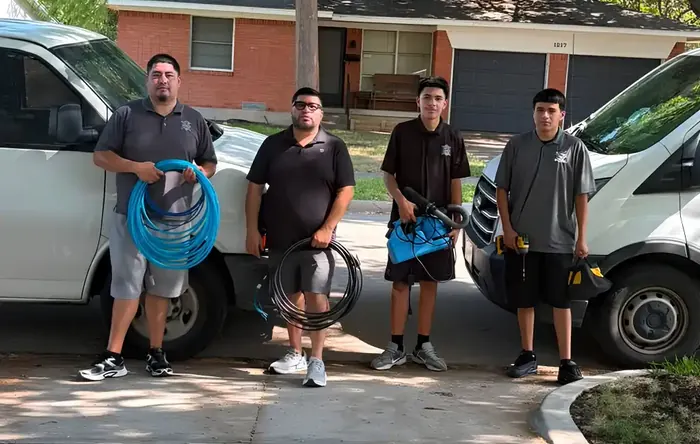
Jose Lara and three crew members standing by the work van in a driveway
Job photo from the Lara's crew.

These are the questions Dallas homeowners and business owners ask Jose and the crew most often, answered straight. Some of the answers are the kind other duct cleaning companies would rather skip, like when cleaning isn't worth paying for, or how $99 deals turn into $600 bills.

The questions are grouped by topic: pricing and our offers, air ducts, dryer vents, mold and odors, scheduling and prep, and commercial work. If your question isn't here, the cost guide and our step-by-step process cover a lot more detail. Or just call (469) 809-2444.
Pricing & offers

What's the least I can spend to get my ducts properly cleaned in Dallas?

With us, $99. That covers every supply and return vent on one HVAC system, cleaned under negative pressure, with before and after photos. If you're not sure the ducts need it, the $69 video inspection is the cheaper first step. Elsewhere in Dallas, a full professional cleaning averages about $499, so anything far below that deserves a close look at the written scope.

Does the $69 inspection count toward the cost of a cleaning?

Yes, it can be credited toward a cleaning. The inspection, regularly $259, puts a camera inside your ducts, looks for mold, debris and blockages, and gives you a written assessment report. If the footage shows the system needs cleaning and you book it, the inspection isn't money thrown away. If it shows the ducts are fine, you've spent $69 instead of more.

Will I get a written price before any extra work is done?

Always. Anything outside the $99 cleaning, such as sanitizing, mold treatment, blower cleaning, a dryer vent or a second system, is quoted in writing after we've seen it and before we start. We show you photos of what we found. You decide. If the answer is no, the original cleaning still gets done at the original price.

How do Dallas duct cleaning prices compare to the national range?

The EPA says duct cleaning typically runs $450 to $1,000 per heating and cooling system nationally, though not always. Dallas lands in a similar place: Lara's local pricing research puts the average full job around $499, with most homeowners paying $263 to $737. Bigger homes, two-system houses and tough attic access push quotes toward the top.

What does your satisfaction guarantee cover?

If you're not satisfied with the cleaning, we come back and re-clean at no charge. That's the guarantee, plainly stated. It applies to the work we did, and the before and after photos from your job make it easy to see what was cleaned. Call the same number you booked with and tell us what isn't right.

Some companies charge by the hour. Is that a problem?

Not by itself, but it makes quotes hard to compare. The EPA suggests that if a provider charges by the hour, you ask for an estimate of how many hours the job will take and get a written agreement with the total cost and scope before work begins. A flat price for a defined scope is easier to hold anyone to.

Air ducts

What's the difference between supply ducts and return ducts?

Supply ducts carry cooled or heated air from the air handler out to the registers in each room. Return ducts pull room air back through the filter to the system. In most Dallas homes the returns are one or two large grilles in a hallway or ceiling, and they collect more dust, pet hair and drywall grit than the supplies. Both need cleaning.

Can flex duct be cleaned, or does it have to be replaced?

It can usually be cleaned, carefully. The round, insulated flex duct in most Dallas attics, often R-6 or R-8, gets air whips and soft brushes rather than stiff rotary brushes, because the inner liner tears. The EPA notes that replacing accessible flex duct is sometimes the more economical choice. If a run is crushed, torn or badly moldy, replacement makes more sense.

What equipment does the crew bring to a duct cleaning?

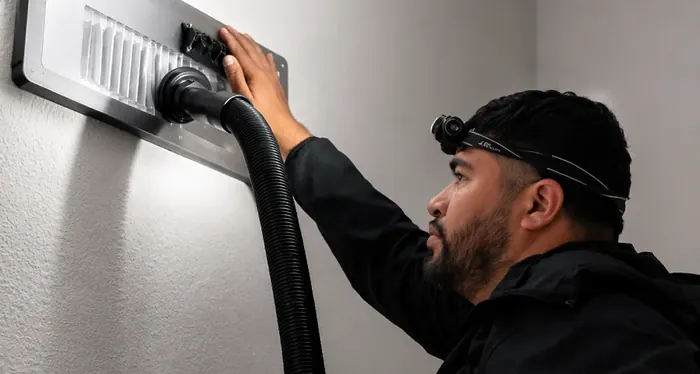
A negative-pressure vacuum system that connects to the ductwork and runs through HEPA filtration, agitation tools like rotary brushes and air whips, a video camera for inspecting inside the runs, and drop cloths and shoe covers for your floors. A shop vac at the registers isn't duct cleaning. If a Dallas company shows up with only that, ask questions.

Do your technicians follow NADCA standards?

Yes. Lara's technicians are trained to NADCA standards, the National Air Duct Cleaners Association's ACR standard for assessing and cleaning HVAC systems. That means source removal: negative pressure on the system and mechanical agitation inside the ducts. The crew is also licensed, insured and background-checked, which matters when people are working inside your Dallas home.

Why is the return plenum usually the dirtiest part of the system?

The return plenum is the box where house air collects before it passes the filter and enters the air handler. Everything floating around the house ends up there first, and if the filter doesn't seal tightly, dust slips past and coats the plenum and blower. In older Dallas homes with attic returns, gaps in the plenum can also pull in insulation.

Should I clean the ducts when I replace my AC unit?

It's a good time to, if you're keeping the existing ductwork. A new air handler and coil hooked up to dirty ducts starts life pulling old debris through itself. Plenty of Dallas homes get a new condenser and air handler but keep the original attic ducts. Cleaning those ducts before or right after installation gives the new equipment a clean start.

Dryer vents

What are the warning signs of a clogged dryer vent?

The laundry room gets unusually hot, clothes come out damp or hot to the touch, you smell something scorched, or lint shows up around the dryer door and behind the machine. Outside, the flap on the wall cap barely opens when the dryer runs. In two-story Dallas homes with roof-exit vents, a clog can build without any visible lint outdoors.

Is a foil or plastic dryer hose safe to use?

White vinyl or plastic hose isn't a good choice for a dryer connection, and thin foil accordion hose crushes easily and traps lint in its ridges. Most dryer makers call for rigid or semi-rigid metal duct for the transition from dryer to wall. If yours is plastic or flattened behind the machine, replacing it is a cheap fix that cuts fire risk.

When do most dryer fires happen?

US Fire Administration data shows home clothes dryer fires run higher in fall and winter, peaking in January, and that failure to clean is the leading factor behind them. In Dallas, that's when sweaters, towels and blankets go through the dryer more often. Late summer or early fall is a sensible time to have the vent cleaned.

Can birds nest in my dryer vent?

Yes. Birds and rodents like the warm, sheltered space behind a wall cap or roof termination, especially in spring. A nest blocks airflow the same way lint does. A proper dryer vent cap with a working flap helps. Avoid covering it with window screen or mesh, because lint packs into it fast. If you hear chirping behind the laundry room wall, get it checked.

Why is a roof dryer vent harder to clean than a wall vent?

A roof vent sends lint up a long vertical run, usually through the attic, and some of it falls back and settles in the low spots. Getting to the roof termination means a ladder and working on shingles, which takes more time and care. Many two-story homes in Dallas vent this way because the laundry room sits in the middle of the house.

Mold & odors

How can I tell mold from ordinary dust on my vents?

You often can't by looking. The EPA says only an expert can make a positive call, sometimes with lab analysis, and that some labs will tell you for about $50 whether a tape-lift sample is mold. Dust wipes off dry and gray. Growth tends to be fuzzy or spotted, comes back after wiping, and often shows up near the coil or sweating ducts.

Why does mold come back after the ducts are cleaned?

Because the moisture that fed it is still there. The EPA is direct about this: if the conditions that caused mold aren't corrected, it will grow back. In Dallas the usual causes are a drain pan that holds water, a coil that sweats, or uninsulated ducts in a hot attic. Insulated ducts that got wet and moldy should be replaced, not cleaned.

What causes a dirty sock smell when the AC starts?

That sour, locker-room smell is usually traced to growth on the evaporator coil, where moisture and dust sit together after the system cycles off. It's often strongest for the first minute or two after startup. Cleaning the ducts won't fix it on its own. The coil and drain pan need cleaning, and then the ducts can be checked for anything downstream.

Does a UV light keep mold out of the AC system?

A UV light mounted near the evaporator coil is meant to limit growth on the coil and drain pan surfaces it can shine on. It doesn't reach inside the ductwork, doesn't remove dust or debris, and doesn't fix a moisture problem. In a Dallas attic system with a sweating coil, the drain and humidity issue should come first. Treat UV as an extra, not a cure.

Which smells from the vents mean I should act right away?

A rotten egg smell can mean a natural gas leak: leave the house and call your gas utility or 911 from outside. A burning electrical or melting plastic smell means shut the system off at the thermostat and call an HVAC technician. A strong dead animal smell needs prompt removal. A mild dusty smell the first time the heat runs each fall is normal.

Scheduling & prep

What days does Duct Cleaning Dallas work?

We work Monday to Saturday. Same-day service is often available when the schedule has room, so it's worth calling in the morning if something can't wait. For summer jobs with an attic air handler, earlier appointments are easier on everyone, since Dallas attics get dangerously hot by mid-afternoon. Call (469) 809-2444 or email contact@ductcleaningdallas.us to book.

Where are you located and which parts of Dallas do you cover?

We're based at 3843 Highgrove Dr in the Midway Hollow area of Northwest Dallas, 75220, between Bachman Lake and Walnut Hill Lane, near Love Field. From there the crew covers neighborhoods across the city, including Preston Hollow, North Dallas, Lake Highlands, Lakewood, Uptown, Oak Lawn, the Park Cities, Oak Cliff, Downtown and the White Rock area.

Will the AC be off while you clean the ducts?

Yes. The system has to be shut down while the ducts are under negative pressure and being agitated, which usually means a few hours for a single-system home. In July and August the house will warm up some. Running the AC a little colder before the crew arrives and booking a morning slot keeps it comfortable.

What should I move or do before the crew arrives?

Clear floor space under each register and around the return grille, since a ladder and drop cloth go there. Make sure we can reach the attic hatch or the closet with the air handler. Take fragile things off shelves under ceiling vents. Put pets somewhere quiet, because doors will be open for hoses. That's about it.

Should I put in a new filter before or after the cleaning?

After. A new filter going in right after the ducts are cleaned starts the system fresh. We'll look at your filter during the visit and tell you if it's the wrong size, installed backward or not sealing in its slot. Those three problems explain a lot of the dust complaints we hear in Dallas homes, even more than dirty ducts.

What information should I have ready when I call for a quote?

Square footage, roughly when the house was built, how many thermostats you have, and where each air handler sits: attic, hall closet or garage. A quick count of supply registers and return grilles helps too. Mention pets, a recent remodel, any musty smell, or signs of rodents. With that, we can tell you what the $99 covers for your home.

Commercial

Do you clean restaurant kitchen hoods and grease ducts?

Yes, kitchen hood and exhaust duct cleaning is offered for commercial clients in Dallas. NFPA 96 sets how often hood systems must be inspected for grease buildup based on cooking volume: monthly for solid-fuel cooking, quarterly for high-volume kitchens, semiannually for moderate volume, and annually for low-volume operations. Each job is quoted after we see the hood and duct run.

Does the $99 duct cleaning offer apply to businesses?

No. The $99 price is for residential air duct cleaning. Commercial jobs in Dallas vary too much for a flat price, with rooftop units, multiple zones, drop ceilings and occupied spaces all changing the scope. We walk the property, look at the systems, and give you a written quote before any work is scheduled.

What kinds of commercial spaces do you work in?

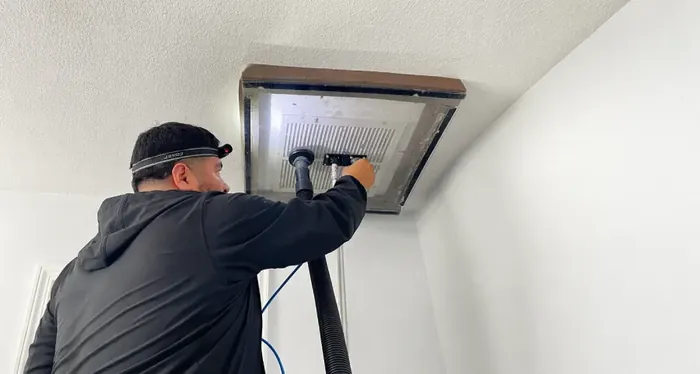
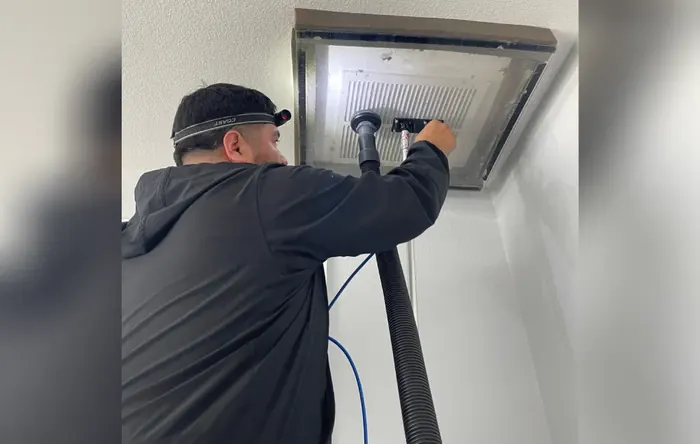
Offices, retail spaces and other commercial properties around Dallas, including buildings with rooftop HVAC units and drop-ceiling offices with square ceiling diffusers. The method is the same source removal used in homes, scaled up: negative pressure on the duct system, agitation inside the runs, and before and after photos you can file with your maintenance records.

How do you put together a commercial duct cleaning quote?

We start with a site visit. We count the HVAC units and note where they sit, whether the ceiling is open, drop tile or hard lid, how much duct runs above occupied space, and when the building can be worked in. Then you get a written quote with the scope spelled out. No numbers over the phone for commercial work.

Go deeper

Dusty vents? We can usually be there this week.

$99 whole-house duct cleaning, every supply and return vent, with before and after photos.

Call nowGet a time slot