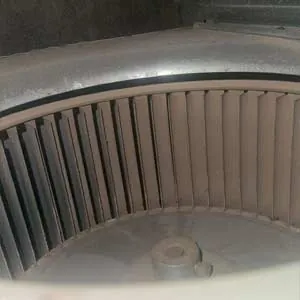
In Dallas, furnace cleaning is mostly blower cleaning
Dallas doesn't get much of a winter. January averages a high of 58°F and a low of 38°F, and the heat usually earns its keep from about December through February. So a lot of homeowners figure the furnace barely runs and can't be that dirty.
Here's the catch. In most Dallas houses the furnace and the AC share one blower. A gas furnace sits in the attic or a hall closet with the evaporator coil bolted on top, and that same blower wheel pushes every bit of cooled air from roughly March to November. Heat pump homes work the same way: one air handler, one blower, running almost all year. By the time you switch to heat in December, the blower has already done nine months of AC duty.
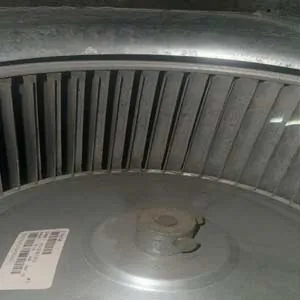
Dust that gets past a cheap filter or a loose filter door sticks to the curved fins of the blower wheel. A thin coat cuts airflow. A thick one throws the wheel off balance, and you start to hear it.
Signs your furnace or blower needs cleaning
| What you notice | What's usually behind it |
|---|---|
| Burning dust smell that lasts well past the first day of heat | Heavy dust on the heat exchanger, heat strips or burner area |
| Weak airflow at the registers, even with a new filter | Blower wheel fins packed with dust |
| Rattle, hum or wobble when the fan kicks on | Dirty, unbalanced blower wheel or a loose mount |
| Dust back on the furniture a day after you clean | Return leaks or gaps pulling attic dust into the system |
| Filter slot was empty, or the filter was bent and collapsed | Unfiltered air went straight across the blower and coil |
| Recent remodel, new floors or drywall work | Fine construction dust pulled into the return |
A short burning smell the first time you run heat each year is normal. If it lingers, smells chemical, or you see soot around the furnace, turn it off and get a licensed HVAC contractor out. If you smell gas, leave the house and call your gas company.
What our furnace cleaning covers, and what it doesn't
We're a cleaning company, and we'll be straight about where cleaning ends and gas work begins.
| Part of the system | What we do | If something's wrong |
|---|---|---|
| Filter and filter rack | Check size and fit, replace the filter, note gaps around the door | We tell you the right size so it seals |
| Blower wheel and housing | Pull the blower where the unit allows, clean each fin, vacuum the housing | Failing motor or capacitor goes to an HVAC tech |
| Cabinet and blower compartment | HEPA vacuum and wipe down | Rust or water damage gets photographed and noted |
| Burner compartment | Vacuum loose dust and debris, no disassembly | Burners, gas valve, igniter or flame issues go to a licensed HVAC tech |
| Supply and return plenums | Cleaned as part of the duct work | Disconnected or crushed plenums get noted |
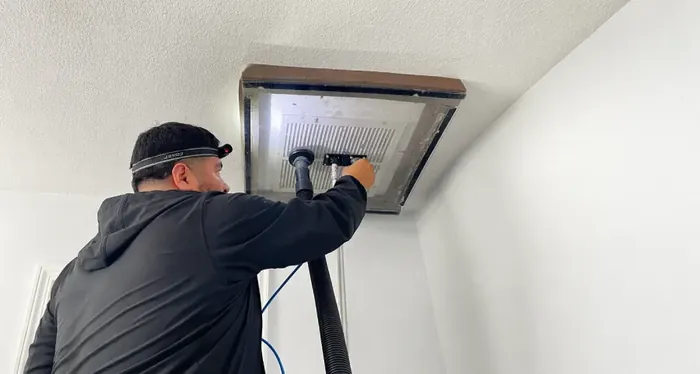
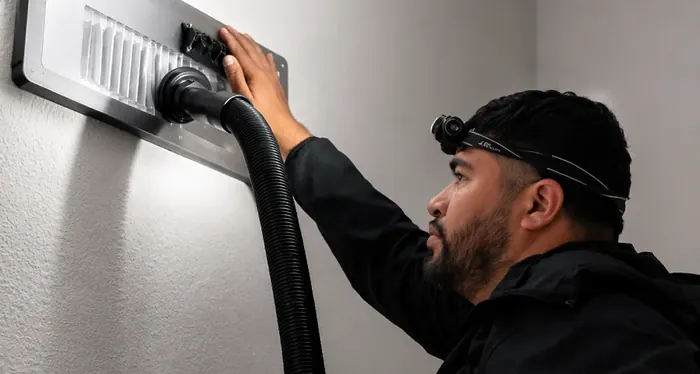
| Ductwork | Negative-pressure cleaning of supply and return runs | Damaged flex duct gets flagged for repair |
What we don't do: we don't repair or adjust anything on the gas side. No gas valves, burners, flue pipes or heat exchangers. If we spot rust flakes, scorch marks above the burners, soot, or a flue pipe that has come loose, we stop, show you the photo, and recommend a licensed HVAC contractor before you use the heat.
On the filter: a pleated MERV 8 that actually fits beats a MERV 13 that leaves a half-inch gap at the edge. Air takes the easy path.
How we clean a furnace, step by step
- Power off. We shut off power at the service switch by the unit and set the thermostat to off.
- Before photos. Blower wheel, cabinet, filter rack and burner compartment, so you can see what we found.
- Open it up. We remove the blower door and slide out the blower assembly where the unit and the space allow. Some horizontal attic units on narrow platforms don't leave room. Then we clean it in place.
- Clean the wheel. Brushes and a HEPA vacuum, fin by fin, using eco-friendly products where the buildup is stuck on.
- Cabinet and burner area. HEPA vacuum of the cabinet and the loose dust around the burners. We don't take the burner assembly apart.
- Filter and reassembly. New filter, blower back in, doors on, power back on.
- Test run. Fan and heat on, airflow checked at the registers.
- After photos and video. Same angles as the before shots.
The before-and-after blower photos on our projects page show what a typical Dallas blower looks like after a few summers of AC use.
Should you clean the ducts at the same time?
Usually, if the blower is bad. A blower wheel caked with dust means air has been moving dust downstream into the supply trunk and out to the rooms. Cleaning the furnace and leaving the ducts dirty is half a job, so most furnace cleanings we do are part of a whole-house duct cleaning.
If the blower looks fine and you're not sure about the ducts, start with a video duct inspection. You'll see the inside of your ducts on camera and decide from there. If the coil and condenser need attention too, that falls under HVAC system cleaning.
What furnace cleaning costs in Dallas
Furnace and blower cleaning isn't included in our $99 whole-home duct cleaning special. We quote it upfront, in writing, after we see the unit. The reason is simple: a closet furnace with three feet of clearance is a short job, and a horizontal unit at the far end of an attic in Preston Hollow is not.
For context on what full duct cleaning runs around here, our Dallas duct cleaning cost guide breaks down the price factors. The pricing page lists what the special includes.
When to book furnace cleaning in Dallas
October and November are the sweet spot. You're done with the heaviest AC months, the attic is no longer past 130°F, and the first real cold front hasn't hit yet. Book then and the first heat cycle of the year runs on a clean blower instead of burning off a summer's worth of dust.
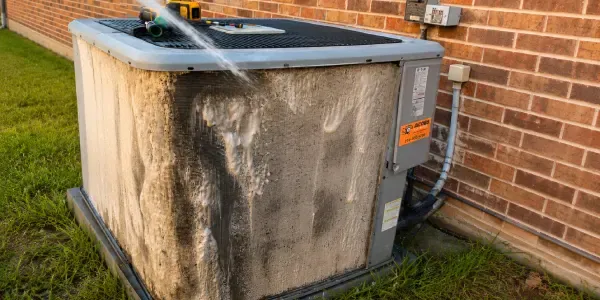
Spring works too, especially if you want the blower clean before the AC starts its long run in March.
Furnace cleaning vs an HVAC tune-up
These get mixed up a lot. Cleaning is what we do: dust and debris out of the blower, cabinet and ducts. A heating tune-up is done by a licensed HVAC tech and covers the gas side: gas pressure, flame, the heat exchanger, the flue, and carbon monoxide checks. Plenty of Dallas homes benefit from both. They aren't the same service, and anyone who says cleaning replaces a tune-up is overselling it.
One more thing worth doing while you're thinking about the furnace: make sure you have working carbon monoxide alarms near the bedrooms if the house has a gas furnace. The EPA's guidance on duct and furnace cleaning is also worth a read before you hire anyone.