First, figure out what kind of dust it is
"Dust coming out of the vents" can mean five different problems. What it looks like, and when it shows up, narrows it down fast.
| What you see | Likely source | First thing to try |
|---|---|---|
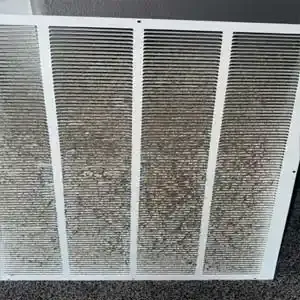
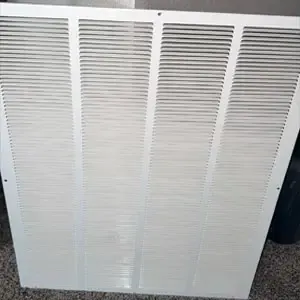
| A gray puff when the AC starts, then nothing | Dust settled on the register and the first few inches of duct | Wipe or vacuum the register covers |
| Fine dust on furniture near vents within a day or two | Filter bypass or a leaky return | Check the filter fit and the return grille |
| Gritty, heavy white dust after a remodel | Drywall dust pulled into the ducts | Duct cleaning, focused on the return side |
| Pink, yellow or white fibers | Torn flex duct, duct board breaking down, or attic insulation getting in | Inspection and repair, then cleaning |
| Black specks or streaks | Candle or fireplace soot, dirty air around the register, mold, or a furnace problem | See the soot section below |
| Lint | A disconnected dryer duct near the system | Dryer vent check |
| Clumps, hair mats, droppings | Debris or pests in the ducts | Cleaning, after pest control if needed |
Start with the filter
It's not exciting, but it fixes more dust complaints than anything else. Pull the filter and check four things.
- Size. The numbers on the frame should match the slot. A 16x25 in a 20x25 slot leaves a 4-inch highway for dust.
- Direction. The arrow on the frame points toward the air handler, in the direction the air moves.
- Seal. Push on the edges. If there's a gap around the filter, or the filter grille doesn't close flat, air goes around it instead of through it.
- Rating. The EPA's advice is to use the highest-efficiency filter your system's manufacturer recommends. Going way above that can choke airflow on some systems.
Check it monthly while the AC is running, which here is roughly March through November.
The Dallas attic problem: leaky returns
Here's the one we see all the time. Most Dallas slab homes have the air handler and ducts in the attic. The return side of the system runs under suction. If there's a gap anywhere on the return (a loose return box behind a ceiling grille, a split in the return plenum, failed tape on an old joint), the system pulls attic air straight in. Attic air in Dallas means blown insulation, roof dust and temps past 130°F in summer.
That dust skips the filter entirely and goes right out your supply registers.
Cleaning the ducts doesn't fix this. It just gives the leak a clean system to dirty again. The fix is sealing the return, which is HVAC repair work. What we can do is find it. During an inspection or a cleaning, we look at the return plenum and attic runs and show you what we see, so you know whether cleaning alone will solve your problem or not.
The older 1950s and 60s ranch homes in Northwest Dallas, with original attic ductwork, are especially prone to this.
When the dust really is in the ducts
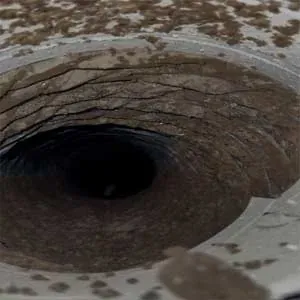
Sometimes the filter is fine, the return is tight, and dust still comes out. Then the ducts are the source. Common reasons:
- A remodel ran with the AC on, and drywall dust coated the returns and plenum.
- The house went years with a missing or badly fitting filter.
- A previous owner had pets, and hair and dander matted the return side.
- New construction debris was never cleaned out.
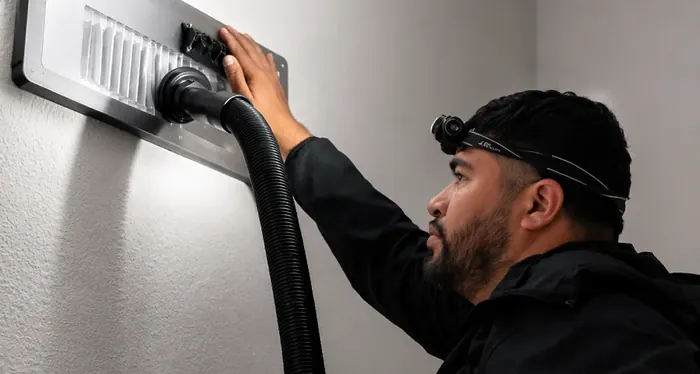
The EPA's duct cleaning guidance lists ducts "clogged with excessive amounts of dust and debris" where particles are "actually released into the home from your supply registers" as one of three reasons to consider cleaning. That's this situation exactly. Our Dallas air duct cleaning is $99 for one system, every supply and return vent included. For just the register and grille side of things, see air vent cleaning.
Black soot from air vents
Black specks or dark streaks around vents scare people, and they should get looked at. But most of the time it's not mold.
Candles, incense and fireplaces. Burning these puts soot in the air. The system circulates it and it shows up at the registers.
Dirty air at the edges. On ceiling registers, a dark shadow around the edge of the cover often means air is leaking between the register boot and the drywall. The drywall works like a filter and catches the dirt. Sealing the boot to the ceiling fixes it.
Mold. Possible, especially near the coil or in ducts that sweat in the attic. The EPA notes that only an expert, sometimes with lab analysis, can confirm whether something is actually mold. Anyone who says "black mold" without showing you a photo is guessing, or selling. Read more about mold in air ducts.
Note: If you have a gas furnace and soot appears when the heat runs, shut the system off and call an HVAC technician. That can point to a combustion problem, and carbon monoxide is a real danger. The EPA recommends having fuel-burning furnaces inspected before each heating season. Make sure your CO detectors work.
Our furnace cleaning service covers the blower and cabinet. A combustion problem is a job for a licensed HVAC technician first.
Lint in the vents
If what's coming out looks like dryer lint, it probably is. When a dryer vent runs through the attic or a wall near the air handler, a loose transition hose or a split vent pipe can dump lint where the return picks it up. That's a fire risk on top of a dust problem. Get the dryer vent checked and cleaned before anything else.
Things that don't help much
- Closing vents in unused rooms. It raises pressure in the ducts and can make leaks worse.
- Dryer sheets or cheesecloth taped over registers. They catch a little and restrict airflow.
- Air fresheners in the return. They cover a smell without fixing why it's there.
- Running the fan on "on" all day to "filter more." With a leaky return, that just pulls more attic dust.
When to call
If you've checked the filter, cleaned the registers and dust is still coming out, the $69 video duct inspection will show you whether it's debris inside the ducts or a leak somewhere, with a written report either way. The full list of signs your ducts need cleaning is worth a look too.