What counts as the HVAC side of the system
Ducts move air. The equipment makes it hot or cold and pushes it. In a typical Dallas home with an attic air handler, the equipment side includes:
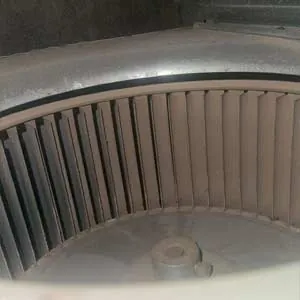
- Blower wheel and housing. The squirrel-cage fan that pushes air through the whole house. Its curved blades collect dust that gets past the filter.
- Evaporator coil. The A-shaped or slab coil sitting above or beside the blower. It's cold and wet all summer, which makes it sticky for dust.
- Condensate drain pan and line. Catches the water the coil pulls out of the air and sends it outside or to a drain.
- Supply and return plenums. The boxes where the main trunk lines connect to the air handler.
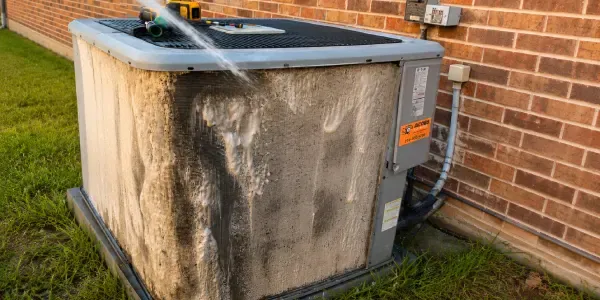
- Outdoor condenser. The unit in the side yard that dumps the heat from your house outdoors.
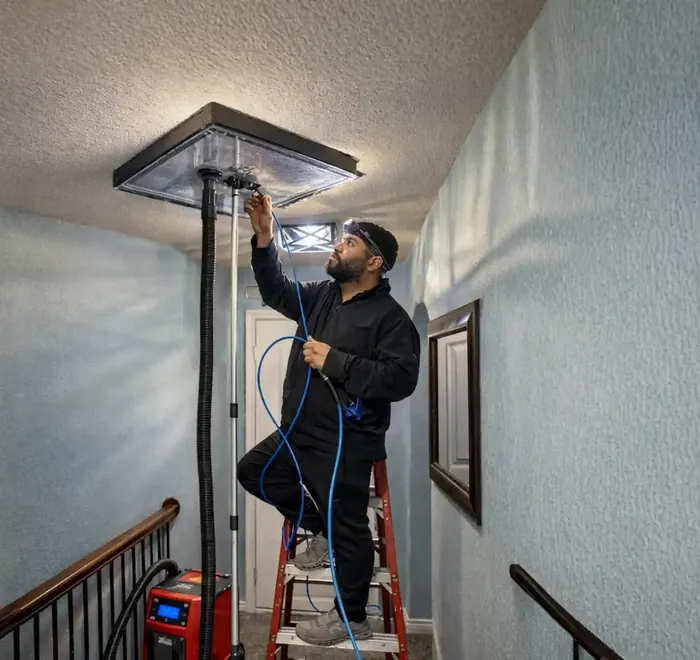
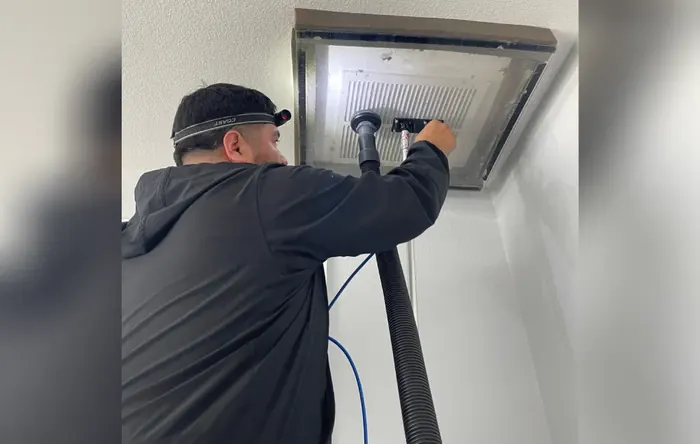
Duct cleaning takes care of the runs between the plenums and your vents. HVAC cleaning takes care of all of the above.
HVAC cleaning vs duct cleaning, side by side
| Part | Covered by duct cleaning | Covered by HVAC cleaning | Why it matters in Dallas |
|---|---|---|---|
| Supply and return runs | Yes | No | Where most settled dust lives |
| Registers and grilles | Yes | No | The parts you see and touch |
| Supply and return plenums | Partly | Yes | First stop for debris coming off the equipment |
| Blower wheel | No | Yes | Dirty blades move less air in peak summer |
| Evaporator coil | No | Yes | Dust on a wet coil cuts cooling and holds moisture |
| Drain pan and line | No | Yes | Standing water and slime are a smell source |
| Outdoor condenser | No | Yes | Cottonwood fluff, grass and dirt block heat transfer |
The EPA makes the same point in its guidance on duct cleaning: if the equipment isn't cleaned along with the ducts, the system can recontaminate the ducts you just paid to clean. That's why the camera inspection before a duct cleaning includes a look inside the air handler.
The blower wheel
This is the part people never see and the one that often makes the biggest difference. A blower wheel with dust packed into its blades moves noticeably less air. The motor works harder, the system runs longer, and every room gets a little weaker airflow.
Cleaning it usually means pulling the blower assembly out of the cabinet, cleaning the wheel and housing, and putting it back balanced. In a tight attic in August, that is real work. Our before and after photos from a Richardson job show what a cleaned wheel looks like next to the gray felt that was on it before.
The evaporator coil and drain pan
The coil is cold and wet for most of the year in Dallas, from roughly March through November. Dust that sticks to a wet coil turns into a mat. That mat slows airflow, holds moisture against the coil, and can become a source of musty smell.
Below it, the drain pan collects water around the clock in summer. When the line slows down, water sits in the pan, and that's where slime and smell start. We clean the pan, flush the line, and check that it actually drains.
On some systems the coil is sealed in a cased box with no service panel. In that case we can clean only the face we can reach without cutting into the housing, and we tell you that before we start, not after.
The outdoor condenser
Your condenser's job is to dump heat. In Dallas it's doing that in 100°F air, so any blockage on the coil fins hurts. Grass clippings from the mower, cottonwood fluff in spring, dryer lint if the dryer vent is nearby, and plain dirt all pack into the fins.
We clean the coil with low-pressure water and coil cleaner, working from the inside out where we can. No pressure washers. They flatten the fins and make things worse.
Keeping the equipment clean afterward
Most of what ends up on a blower wheel or coil got there by going around the filter, not through it. Check that the filter actually fits its slot with no gap on the sides, and that the filter door or return grille closes tight. A pleated filter in the MERV 8 to 11 range suits most Dallas homes. Going much higher without asking your HVAC company can choke airflow on older systems. Pour a cup of white vinegar down the condensate line access a few times during summer if your system has one, and keep the mower from blowing clippings into the condenser.
What we don't do
We clean equipment. We don't charge refrigerant, replace capacitors, or repair electrical parts. In Texas that's licensed air conditioning and refrigeration work done by a TDLR-licensed contractor. If we see an oily spot on a coil, a bulging capacitor, or a burned wire, we'll photograph it and tell you to call your HVAC company. That's a referral, not an upsell.
When HVAC cleaning makes sense
| You notice | Likely equipment cause |
|---|---|
| Weak airflow at every vent, not just one room | Dirty blower wheel or coil |
| Musty smell when the AC first starts | Drain pan or coil holding moisture |
| Water in the emergency pan or dripping from the ceiling | Clogged condensate line |
| Outdoor unit runs constantly in summer | Dirty condenser coil |
| Ducts were cleaned but dust came back fast | Blower or coil reloading the system |
Pricing and scheduling
Equipment cleaning isn't part of the $99 duct cleaning. It's quoted upfront in writing after we open the air handler and look, because a slightly dusty blower and a wheel caked solid are very different jobs. Many homeowners book it alongside a full duct cleaning so the whole system is clean at the same time. If you just want to know what condition your equipment is in, the $69 inspection covers a look inside the air handler.
For heating-side equipment, see furnace cleaning. For musty cooling-season smells and AC vent problems, the AC duct cleaning page goes into more detail. Business owners with rooftop units can read about commercial duct cleaning.