What commercial duct cleaning covers
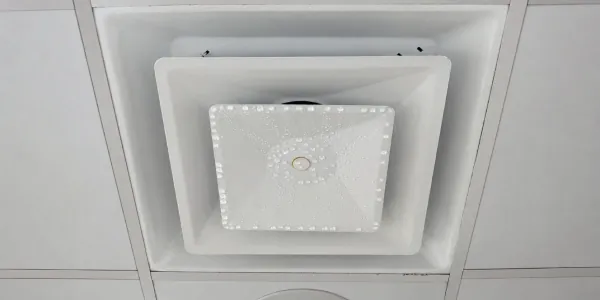
A commercial system is the same idea as a house, just bigger and more spread out. Supply air leaves the rooftop unit or air handler, travels through sheet-metal trunk lines above the ceiling, and comes out of diffusers in the drop ceiling grid. Return air usually comes back through ceiling grilles, sometimes ducted and sometimes through the open plenum above the tiles.
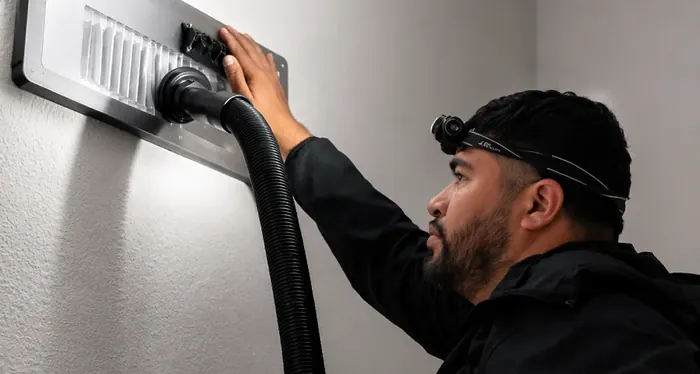
We clean the ducted supply and return runs, the diffusers and grilles, and the supply plenum where the duct leaves the unit. The work follows source removal, the method at the center of NADCA's ACR standard: put the system under negative pressure, loosen the debris with brushes and air whips, and capture it at the vacuum.
The buildings we see most in Dallas
| Building type | Typical system | What we plan around |
|---|---|---|
| Small and mid-size offices | Rooftop units or a split system per suite | Weekday occupancy, ceiling tiles over desks and electronics |
| Retail and strip centers | One packaged rooftop unit per tenant space | Store hours, merchandise on shelves under the diffusers |
| Medical and dental suites | Rooftop units or split systems | Patient schedules, exam rooms, extra containment |
| Restaurants (dining room side) | Rooftop units, separate from the kitchen hood | Service hours, grease load near the kitchen |
| Apartment and condo common areas | Air handlers in mechanical rooms | Resident access, notice to tenants |
| Churches and event spaces | Large rooftop units over open rooms | Event calendar, high ceilings |
Kitchen exhaust is a different system with its own fire code (NFPA 96) and is handled separately as restaurant hood and exhaust duct cleaning.
Rooftop units and drop ceilings
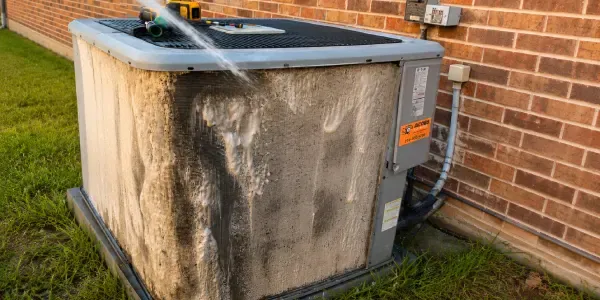
Most commercial buildings in Dallas run packaged rooftop units. In summer that means the unit sits on a roof that gets brutally hot, and the ducts drop straight down into the ceiling space. Dirt gets into these systems in a few predictable ways: filters left too long, filter racks with gaps, and return air drawn through an open ceiling plenum full of dust that's been settling on top of the tiles since the build-out.
Older buildings add their own wrinkles. A 1980s office building off LBJ or Stemmons may have been through three or four tenant build-outs, each one adding new flex branches to the original metal trunks and leaving drywall dust behind. It's common to find a mix of clean newer runs and old runs that nobody has touched since the building opened. The camera shows which is which, so you aren't paying to clean runs that are already fine.
On the inside, we pop ceiling tiles where we need access, protect what's below them, and work run by run. Diffusers come down and get cleaned. On the roof, we look at the unit's filters and the blower compartment while we're there. If the coil or blower wheel needs attention, that's HVAC equipment cleaning, quoted as its own line.
Scheduling around your business
We work Monday to Saturday. For a lot of offices, a Saturday clean is the simplest answer: nobody at their desks, no clients in the lobby. Retail spaces sometimes prefer the first hours of the day before opening. Larger spaces can be done zone by zone across several visits so the whole floor is never out of service at once.
What we won't do is promise a time slot we can't staff. Tell us what your building needs, and we'll tell you honestly whether it fits.
For property managers
If you manage several buildings or tenant spaces, the useful things are a clear scope, predictable pricing per unit, and a record you can forward. We quote each property in writing after a walkthrough, and we can line up multiple suites in the same building on the same day. NADCA's commercial cleaning checklist recommends inspecting commercial air handlers and ducts every year, which makes a good baseline for a maintenance calendar. For a quick read on a building you just took over, a video duct inspection is the cheapest way to find out what's in there.
Documentation you get
Note: Every commercial job comes with before and after photos and video. Property managers and facility leads use them to show owners the work was done and to keep a maintenance history.
Along with the photos, you get a written scope that matches the quote and notes on anything we found that belongs to a different trade: a crushed duct, a missing filter rack door, a coil that needs cleaning, water staining near a unit. We don't hand out official-looking certificates. We hand out evidence.
Is it worth doing?
Sometimes not yet. If your filters are maintained and the inspection shows light dust, we'll tell you to wait. Cleaning makes sense when diffusers are visibly dusting the ceiling tiles around them, when debris shows up on the camera, after construction or a tenant build-out, after a roof leak into the ductwork, or when there's evidence of pests. Those are the same signs we look for in homes, just multiplied across more square footage. For the full list of what we offer, see the services overview.
How the job runs
- Walkthrough. We look at the units, ceiling type, access and your schedule.
- Written quote. Scope, price and timing, before anything starts.
- Setup. Containment and protection over desks, shelves or equipment under the work area.
- Cleaning. Negative pressure on the system, agitation run by run, diffusers and grilles cleaned.
- Close-up. Access panels patched, ceiling tiles replaced, area wiped down.
- Report. Photos and notes sent to whoever needs them.
If you also have a home system that needs attention, our residential duct cleaning runs on the $99 offer. For the general overview of how duct cleaning works, see our main Dallas duct cleaning page.