One lake, four neighborhoods
White Rock Lake was finished around 1910 as a reservoir. Today it's mostly park, with a trail of more than nine miles around it and the Dallas Arboretum on the eastern shore. The neighborhoods on the east and southeast side all share ZIP 75218, but their houses came from very different decades.
Forest Hills
Platted in April 1924 across from the Arboretum, between Garland Rd, Lakeland Dr, Highland Rd and the old Santa Fe tracks. Early ads sold English Tudor houses set among big oak, elm and pecan trees, and plenty of those trees are still standing. Dallas annexed it in May 1945, and ranch homes filled the open lots after the war.
Little Forest Hills
Next door, between Lakeland Dr and Casa Linda. Its wood-frame houses from the 1930s and 1940s started as weekend lake houses and hunting cabins. Artists moved in during the 1980s and 1990s, and since then many of those small homes have been renovated and enlarged.
Casa Linda Estates
South and east of the lake below Garland Rd. Carl and Ida Brown bought the 640 acres in 1933, and the family kept building into the 1980s. Spanish street names, some Spanish Colonial Revival houses, and Casa Linda Plaza, where El Fenix has been a tenant since the mid-1950s.
Lochwood
North of Garland Rd up to Northwest Hwy, around the Dixon Branch of White Rock Creek. Built after World War II: one- and two-story ranches under big mature trees.
What all that history does to a duct system
The Tudors and the lake cottages weren't built for central air. Owners added AC, then rooms, sometimes a second story. Each step changed the ductwork, not always with a plan. In those houses, the crew looks for one air handler stretched too far, old sheet metal mixed with flex from several decades, and in some older homes, runs under a pier-and-beam floor where it's damp. The postwar ranches in Lochwood and Casa Linda are simpler: attic air handler, flex replaced in pieces, one main return.
| Home type here | What we usually find | What we recommend |
|---|---|---|
| Enlarged 1930s or 40s cottage | Long runs to additions, mixed duct types | Camera inspection first |
| 1920s Tudor in Forest Hills | Retrofit attic ducts, plaster ceilings | Standard cleaning, grilles removed by hand |
| Postwar ranch in Lochwood or Casa Linda | Attic flex of mixed ages, one main return | Standard cleaning if the runs are intact |
| Home with a crawlspace system | Rust at boots, damp insulation, musty floor vents | Inspection, then clean the sound runs |
If we see boot or wrap material that looks suspect in an older house, we stop and tell you.
Lake air and mold, the honest version
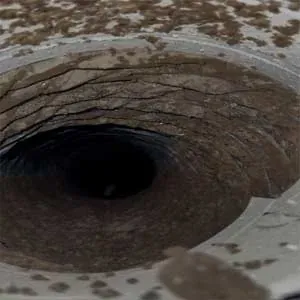
People bring up the lake when they ask about mold, and it's a fair question. The lake, the creeks and heavy shade keep some lots damper, especially after spring storms. But mold in a duct system comes from moisture inside the system: a clogged condensate line, a sweating duct, a wet crawlspace, a leaky return pulling damp air. Fix that and the lake isn't the problem.
Dark spots on a register? Read our page on mold in air ducts and AC vents before booking anything.
Those oaks, elms and pecans also drop a lot of pollen every spring, and much of it lands on return grilles and filters. A good filter that fits snugly handles most of it. If you're not sure your ducts need anything at all, our list of signs your air ducts need cleaning is an honest place to start, and how often to clean air ducts covers the timing question.